Impact of Problem-Based Learning on Academic Performance: Comparison be-tween Systems Engineering and Nursing
DOI:
https://doi.org/10.63728/riisds.v10i1.56Keywords:
Problem Based Learning, Academic performance, University disciplines, Practical skills, Adaptive methodologyAbstract
This study compares the impact of Problem-Based Learning (PBL) on the academic performance of students in different university disciplines, specifically in systems engineering and nursing, based on the studies by Alejos (2017) and Lujan (2018). While in the context of engineering programming PBL did not show significant improvements in performance, in the specialty of geriatrics for nursing students notable increases in grades and a positive perception of learning were observed. This contrast suggests that PBL might be more effective in areas where hands-on learning and collaboration are essential, such as in health sciences. The findings indicate that the PBL methodology promotes the acquisition of practical and teamwork skills, relevant characteristics in health training. On the other hand, in technical and structured disciplines, such as programming, a pedagogical approach that combines elements of PBL with traditional methods seems to be required to better respond to the sequential and logical nature of the subject. In conclusion, PBL is valuable in specific contexts and must be adapted to the disciplinary profile and needs of each area of study.
Downloads
References
Allen, D., & Tanner, K. (2003). Approaches to cell biology teaching: learning content in context-problem-based learning. Cell Biology Education, 2(2), 73–81.
Belland, B. R., Glazewski, K. D., & Richardson, J. C. (2013). A scaffolding framework to support the construction of evidence-based arguments among middle school students. Educational Technology Research and Development, 61, 409–432.
Dolmans, D. H., De Grave, W., Wolfhagen, I. H., & Van Der Vleuten, C. P. (2005). Problem-based learning: future challenges for educational practice and research. Medical Education, 39(7), 732–741.
Gijbels, D., Dochy, F., Van Den Bossche, P., & Segers, M. (2005). Effects of problem-based learning: A meta-analysis from the angle of assessment. Review of Educational Research, 75(1), 27–61.
Hmelo-Silver, C. E. (2004). Problem-based learning: What and how do students learn? Educational Psychology Review, 16(3), 235–266.
Hmelo-Silver, C. E., & Barrows, H. S. (2008). Facilitating collaborative knowledge building. Cognition and Instruction, 26(1), 48–94.
Kirschner, P. A., Sweller, J., & Clark, R. E. (2006). Why minimal guidance during instruction does not work: An analysis of the failure of constructivist, discovery, problem-based, experiential, and inquiry-based teaching. Educational Psychologist, 41(2), 75–86.
Mayer, R. E. (2004). Should there be a three-strikes rule against pure discovery learning? The case for guided methods of instruction. American Psychologist, 59(1).
Prince, M. J., & Felder, R. M. (2006). Inductive teaching and learning methods: Definitions, comparisons, and research bases. Journal of Engineering Education, 95(2), 123–138.
Yew, E. H., & Schmidt, H. G. (2012). Evidence for constructive, self-regulatory, and collaborative processes in problem-based learning. Advances in Health Sciences Education, 17, 251–260.
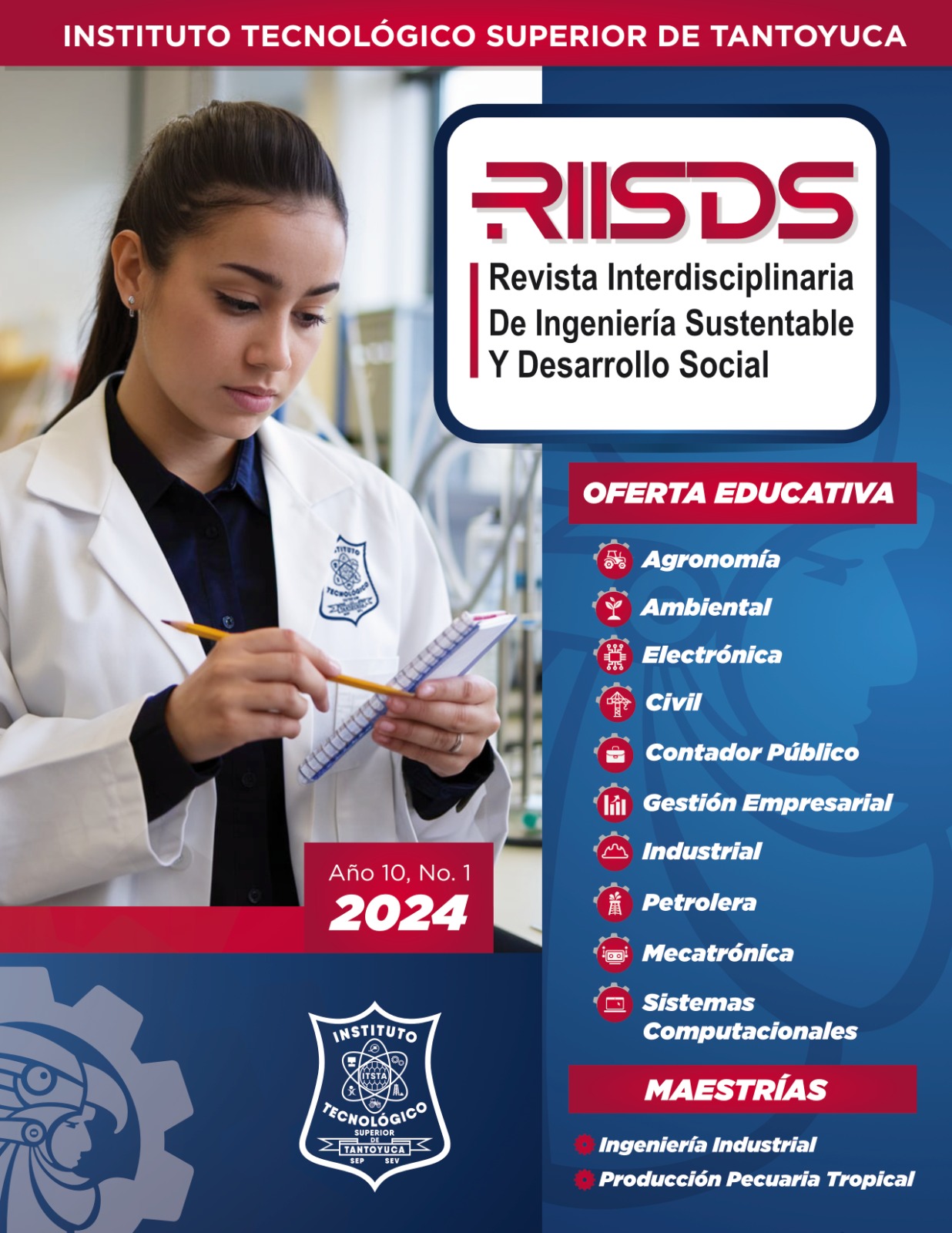
Downloads
Published
How to Cite
Issue
Section
License
Copyright (c) 2025 Revista Interdisciplinaria de Ingeniería Sustentable y Desarrollo Social

This work is licensed under a Creative Commons Attribution 4.0 International License.
Derechos de autor y cesión no exclusiva
De conformidad con la política editorial y con lo establecido en los artículos publicados, las personas autoras que publican en RIISDS:
-
Conservan íntegramente los derechos morales y patrimoniales de sus obras.
-
Otorgan a la revista RIISDS un derecho no exclusivo de primera publicación, necesario para la difusión científica.
-
Aceptan que su obra sea difundida bajo la licencia Creative Commons Atribución 4.0 Internacional (CC BY 4.0).
Las personas autoras conservan permanentemente:
-
El derecho de reconocimiento de autoría.
-
El derecho a la integridad de la obra.
-
El derecho a ser citados correctamente en cualquier reutilización.
-
Mantienen la titularidad total de los derechos patrimoniales.
-
Permiten, mediante CC BY 4.0, la reproducción, distribución, comunicación pública y transformación de la obra.
RIISDS:
-
Ejerce únicamente el derecho de primera publicación.
-
No reclama exclusividad ni restringe el uso posterior del artículo.
-
No impone embargos ni limitaciones adicionales.